Studio
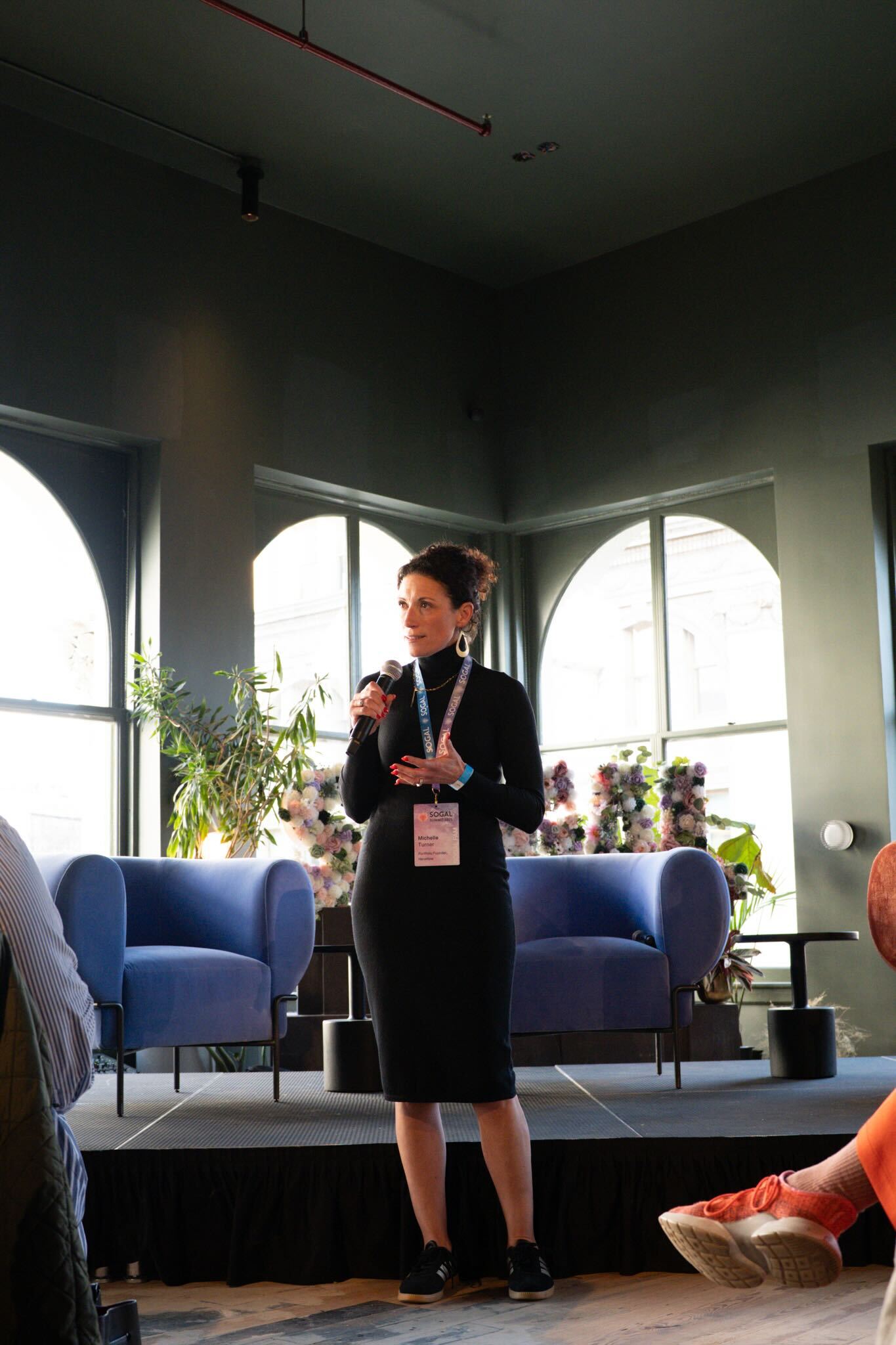
From Foster Parent to Founder: Why Michelle Turner Built Here Now Health
For children and teens in the child welfare system, mental health challenges are the norm, not the exception.¹ According to the American Academy of Pediatrics, mental healthcare is also the largest unmet health need they face.²
Michelle Turner should know. She has been a foster parent for more than five years.
That’s why Michelle founded Here Now Health, a virtual behavioral health company created specifically for kids and families affected by the child welfare system. The idea is straightforward: children in foster care often need therapy and support, but the current system’s processes and workflows just aren’t designed for the realities these families face.
A High-Need Population and a System That Can’t Keep Up
Research shows³ that up to 80% of teens in foster care have a mental health diagnosis, Michelle says. Even for those without a diagnosis, many children in the system could benefit from a stable, supportive relationship with a therapist.
But access to care is still the major hurdle. In Michelle’s experience, three out of four foster parents report that they can’t access therapy for the children in their homes. And when support is delayed or nonexistent, those situations can escalate into emergency room visits, hospitalizations, and even residential treatment—sometimes because it’s the only bed for the kids to sleep in.
The most frustrating part? Insurance coverage isn’t actually the main problem. Kids in foster care—and most young people who have been adopted or aged out of the system—are guaranteed Medicaid. “It’s not the coverage that’s the issue,” Michelle says. “It’s the access to care.”
A Founder’s “Why,” Built From Lived Experience
Here Now Health was inspired by two parts of Michelle’s life that ran side by side for years: healthcare innovation and foster care. Professionally, she helped build Hazel Health, a school-based telemedicine provider. At home, she and her husband became foster parents in 2013, caring for more than 40 children over five years, four of whom they adopted. She later became a CASA volunteer (Court Appointed Special Advocate) and worked on family preservation or safety plans to help prevent separation before it happens.
Even with her background in healthcare, Michelle still struggled to get kids the mental healthcare they needed to thrive or remain stable. Sometimes the barrier wasn’t about clinical complexity, but simple logistics: a misspelled last name; a missing Medicaid card; multiple birthdates across different systems.
These experiences led her to a key question: What if a behavioral health provider assumed that missing information wasn’t the rare exception? What if it were the norm?
“Edge Cases” That Aren’t Edge Cases at All
Here Now Health’s care model begins with one simple fact: In foster care, young people’s records are often incomplete, inconsistent, or missing. Here Now Health takes what other companies call “edge cases” and centers them, piecing together that fragmented data to expedite patient care.
This is immediately apparent in the intake process. The intake form takes less than three minutes to complete and requires a minimal amount of information about the patient. The reason is as simple as it is practical: “We don’t know which pieces will be missing,” Michelle says.
Rather than turning families away for missing paperwork, the company accepts alternatives, like a placement letter in lieu of a Medicaid card. That flexibility matters when a child has been called one name their entire life but is listed under another in official records.
These details aren’t just administrative hiccups; they’re the difference between a child getting help quickly or waiting in limbo while a caregiver tries desperately to solve problems that shouldn’t be theirs to solve.
Care for the Child and the Caregiver
There’s another unfortunate theme that runs throughout foster care: the stability of a child’s placement is closely tied to how supported their caregiver feels, especially during transitions. This realization led Michelle to focus on virtual care.
She believes one of the biggest advantages of virtual care is continuity. When a trusted provider can follow a young person wherever their placement leads, they can maintain that relationship even if they move to another home, town, or even state. That continuity helps avoid the exhausting, sometimes retraumatizing cycle of retelling their story to every new provider.
Just as important as the company’s focus on youth is its approach to supporting caregivers, Here Now Health works directly with a child’s current caregiver, providing support regardless of placement stability. Whether the child moves from one foster parent to another, or from a foster placement to live with a family member, the child’s therapist can provide insight into the child’s needs, behaviors, and triggers to ease these transitions.
The model is designed to relieve pressure on the system, too. Case managers are often overworked and underpaid, though they’re the glue that holds the foster care system together. Instead of spending hours searching for a therapist who accepts Medicaid and has child-welfare experience, they can refer families directly to Here Now Health.
Early Traction
Already, Here Now Health has seen incredible results. One of their most important outcomes to-date is connecting kids to care within 48 hours.
This challenges a common assumption about Medicaid populations: that engagement is the main problem. Michelle would disagree. She knows when healthcare systems don’t fit real people’s lives, participation drops. “When you actually build something that feels like it was built for them,” she says, “engagement is not actually the issue.”
What’s Next: Expanding Access and Services
After an initial investment from Healthworx Studio, Here Now Health closed an oversubscribed pre-seed round at the end of 2025, led by SoGal Ventures. The round also included Fiore Ventures, Luminary Impact, Hustle Fund, The Donna Fund, Sorenson Impact, and a group of deeply mission-aligned angel investors.
Here Now Health is currently providing care in Missouri and Virginia, though Michelle plans to add more states in 2026. The long-term goal is to become “the healthcare partner for the child welfare system.”
That includes adding services in areas where families often face long waitlists and inconsistent information, like medication management and psychological evaluations. As the company grows, it plans to focus more on measurement-based care to improve outcomes and clearly track that success.
Here Now Health is working to make specialized, measurable support easier to access. Because, for families trying to navigate foster care, mental health care shouldn’t depend on perfect paperwork.
——-
¹ Council on Foster Care, Adoption, and Kinship Care; Committee on Adolescence; Council on Early Childhood. Health care issues for children and adolescents in foster care and kinship care. Pediatrics. 2015;136(4):e1131-e1140. doi:10.1542/peds.2015-2655
² American Academy of Pediatrics. Mental and behavioral health needs of children in foster care. American Academy of Pediatrics. Updated July 21, 2021. Accessed February 3, 2026. Available at: https://www.aap.org/en/patient-care/foster-care/mental-and-behavioral-health-needs-of-children-in-foster-care/

