Studio
Three Clinicians. Decades of Frustration. One Clinic Built to Finally Get It Right.
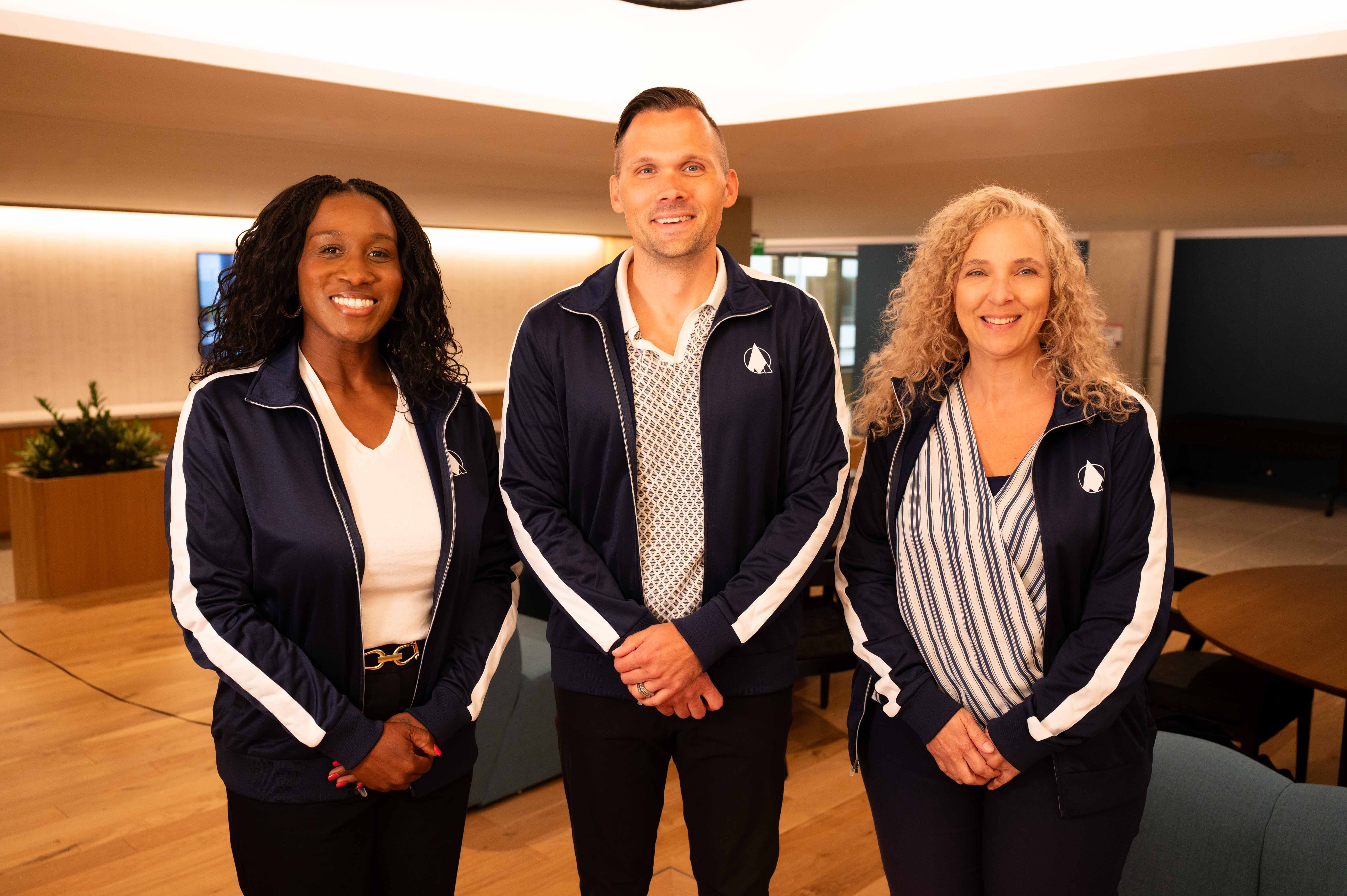
When Healthworx Studio set out to build a better sleep medicine company, the first question wasn't what to build, it was whom to build it with. The answer came in the form of three clinicians who, among them, carry decades of frontline experience. Each having worked tirelessly in an effort to prevent patients from falling through the cracks of a fragmented, CPAP-first system. Let’s meet the team behind Polaris, a newly launched, fully virtual sleep clinic, built differently from the ground up.
A System That Was Never Really About the Patient
To understand why Polaris exists, it helps to understand how most people currently get sleep care–or more often, don't.
"Usually you have to struggle with sleep, struggle with hypertension, possibly have atrial fibrillation, be referred to a cardiologist, to a pulmonologist… then the subject of sleep enters the narrative," says Alicia Faulkner, Polaris's nurse practitioner. "That's the traditional route."
From there, the wait compounds. Specialist appointments, in-person sleep testing, insurance navigation, weeks for test results to be scored and reviewed, another follow-up appointment potentially months out. Brent Jacobus, Polaris's medical director, has watched this play out from the provider side. "In my current in-person practice, patients are waiting on average about six months from when they see me to getting their CPAP device," he says. "That's a long time to just not feel well, not sleep well."
And when treatment does finally arrive, it often comes with an invisible ceiling. Most sleep clinics, as Tina Garrett (Polaris's Care Coordinator) sees it, are structured less around patient outcomes and more around device sales. "A lot of those online companies are selling you a machine," Tina says. "And the care stops the moment you get that prescription."
What follows–the adjustment period, the compliance challenges, the patients who quietly give up–largely happens without clinical support.
Who Gets Left Behind
The patients who suffer most under the traditional model aren't hard to identify. They're the shift workers who can't schedule a sleep lab overnight because they're back on shift by morning. They're truck drivers with limited access to care while traveling long distances away from home. They're new mothers who've normalized exhaustion. They're the people who were diagnosed years ago, never followed up, and have no idea what their results even said.
"I know personally in my area, patients will be diagnosed with apnea and not even find out what their results are," says Tina, who has spent more than 20 years as a sleep technologist. "They never went back to find out. That's not a pattern we want to follow at Polaris."
Tina's background is unusual in the best way. She pairs two decades of sleep technology experience with an advanced degree in health and wellness coaching, which means she comes to patient care with both the clinical rigor to read a CPAP compliance report and the behavioral insight to understand why someone might be failing to use it. At Polaris, she functions as the connective tissue between clinical recommendation and lived reality–reaching out monthly, monitoring device data proactively, and catching problems before they become dropout statistics.
The Team Behind the Model
Brent Jacobus came to sleep medicine through neurology–eight years of residency and practice, followed by five years specializing in sleep, much of it in the Air Force. His clinical lens is broader than most sleep physicians', and his frustration with the field's limited therapeutic imagination has hit a peak.
"Sleep's weird in the fact that there's a lot of specialty medical specialists who can go into sleep medicine," he says. "It's far and away saturated by pulmonologists, and so they're great at breathing machines." The result is a field that has conflated one treatment modality with the entire discipline. Patients who can't tolerate CPAP are often simply sent away. "Even if you give them a dental device, it won't cure their sleep apnea, but it'll reduce it significantly to where they may feel a little bit better," Brent says. "At least we're providing an alternative and not just saying, ‘I can't be of service to you anymore.’”
Alicia came up in a pulmonary clinic, where the financial incentives around CPAP sales were impossible to ignore. She went along with the model, and she watched what it missed.
"I was meeting so many patients at the end," she says. "Where were we at the beginning? Where was somebody when you were only on one blood pressure medicine, now you're on three? Where was somebody when you were feeling your fast heart rate, and now you're in A-fib, and now you're in the ER?"
Sleep, she argues, sits upstream of nearly every major health concern–metabolism, heart health, cognitive function, mood–and yet it's almost never part of a standard primary care workup. One of her goals at Polaris is to change that by partnering with primary care offices and establishing sleep screening as a routine part of annual physicals. "You know better, you do better," as Tina puts it, and right now, too many people simply don't know.
How Polaris Actually Works
The mechanics of the Polaris model are a direct response to every point of friction in the traditional system.
A patient is referred, or simply seeks support independently, and can often be seen within days. A home sleep study device ships directly to them, done on their own schedule, in their own bed. Data is reviewed the following morning by Brent. A follow-up with Alicia can happen the same week. The entire arc from referral to treatment, which currently averages six months in traditional care, is compressed to under a week.
Treatment itself is never assumed. Polaris presents patients with the full menu: CPAP, oral appliance therapy in partnership with local sleep dentists, positional therapy, lifestyle coaching with Tina, and, for more complex cases, FDA-approved hypoglossal nerve stimulators. Polaris refers patients to independent vendors for any equipment, deliberately removing the financial conflicts of interest that distort clinical recommendations elsewhere.
And then, unlike virtually every other model in the space, the care continues. Tina monitors compliance data and checks in monthly. Follow-up visits with Alicia are scheduled at 30 to 90 days, six months, and one year, timed to align with insurance requirements, reducing out-of-pocket costs while maintaining genuine clinical continuity.
"Nobody's going to fall through the cracks," Tina says. It's a phrase she keeps returning to. In a field defined by gaps in care, it functions as both a promise and a design principle.
Something That Hasn't Existed Before
All three clinicians describe Polaris not in terms of career opportunity, but in terms of finally being able to practice the way they always thought medicine should work.
"I have not seen anything that can do comprehensive sleep management that way," Brent says. "I'm just super excited about the niche space we're going into–and about being able to provide good quality sleep medicine, whether or not it does anything for my career."
Tina is direct about what drew her in. "It's not about building our resume. It's not about making money. It's about truly making a difference in patients' lives. We see it day to day–people who weren't being helped, or it took years for them to find us to get help."
Alicia says she's had patients cry in her office because no one had ever explained to them that sleep was connected to their depression, their energy, their heart, their metabolism. That the right conversation at the right time could have changed the trajectory of their health. "We're going to be able to reach people in their homes, in their cars, at soccer practice, wherever they are," she says. "And we're going to be able to talk about your sleep health and how this can improve your overall life."
Polaris launched out of Healthworx Studio and began seeing patients this month. In under six months from concept to clinical launch, Studio assembled and brought to market something the sleep medicine field hasn't seen: a fully virtual, genuinely holistic, patient-first clinic run by clinicians who've spent careers watching the current system fail–and decided to build a better one.
Polaris is currently accepting patients across DC, Maryland, and Virginia. To learn more, check insurance compatibility, or schedule a virtual consultation, visit polarissleep.com.

